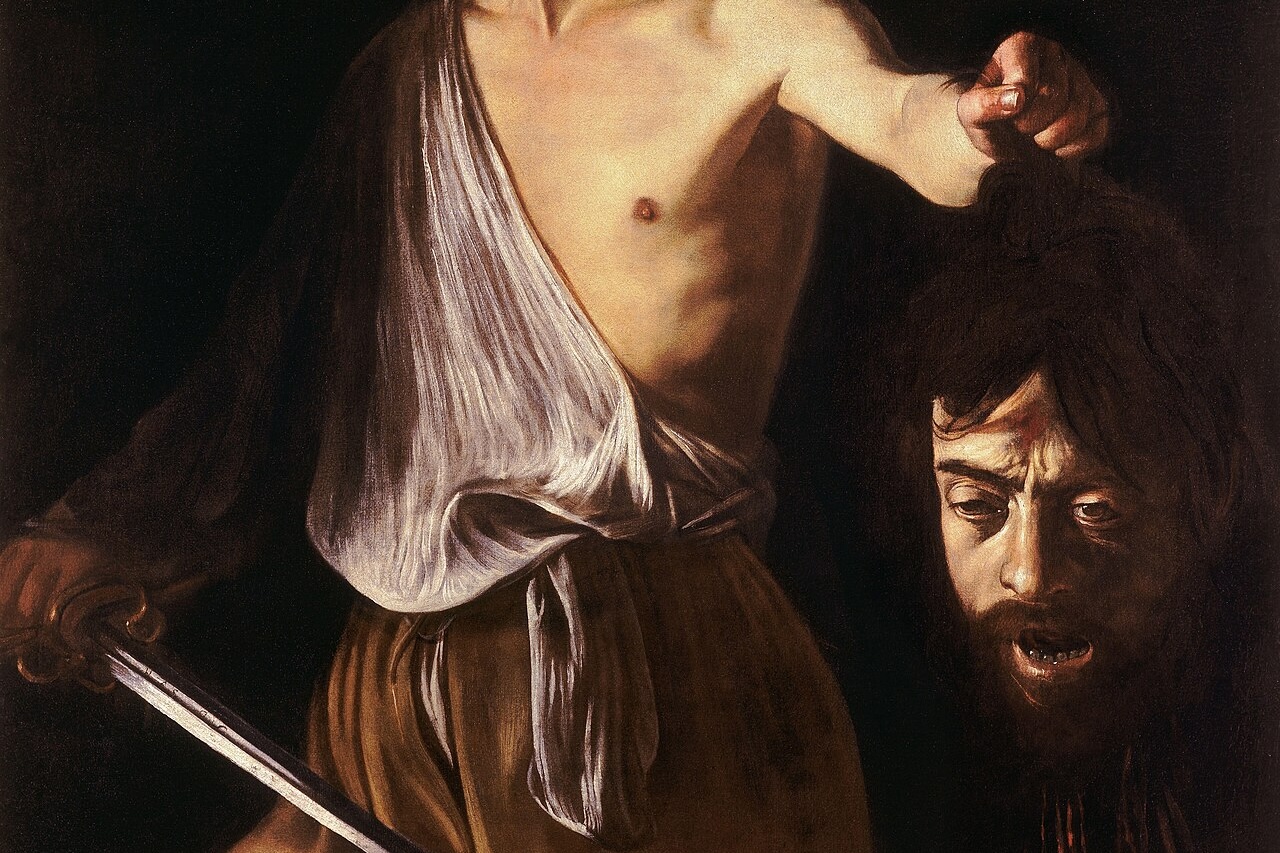
Detail from David with the Head of Goliath (1610). Caravaggio used his self-portrait for the head of Goliath.
Inspired by Caravaggio: how the master of chiaroscuro influenced film, photography and art
Like Reggie Burrows Hodges, so many artists, photographers and film directors have been inspired by the work of Michelangelo Merisi da Caravaggio
As part of his forthcoming exhibition, the artist Reggie Burrows Hodges will present a monumental, site-specific work inspired both formally and by the scale of Caravaggio’s The Beheading of Saint John the Baptist; responding to Malta’s cultural legacy, as part of his first European solo exhibition at MICAS, Reggie Burrows Hodges: Mela.
The significance of this new work, hanging on the fortification walls which flank MICAS’s tiered galleries, carries special resonance for Malta’s flagship contemporary art museum. The Baroque, along with Michelangelo Merisi da Caravaggio’s sojourn and work in Malta, have long been the dominant cultural narrative for the islands. Hodges’s response in Mela amplifies the MICAS’s role in providing an ecosystem that furthers the contemporary arts as part of Malta’s evolving cultural heritage.
Like Hodges, so many artists, photographers and film directors have been inspired by the work of the master…
Peter Doig – Radicality of Caravaggio’s realism
Doig first saw Caravaggio’s work at the Royal Academy’s Painting in Naples exhibition in the early 80s. Finding them different from Renaissance paintings, he saw in Caravaggio’s paintings something “sinister… an air of menace, and they’re obviously very sexual.”
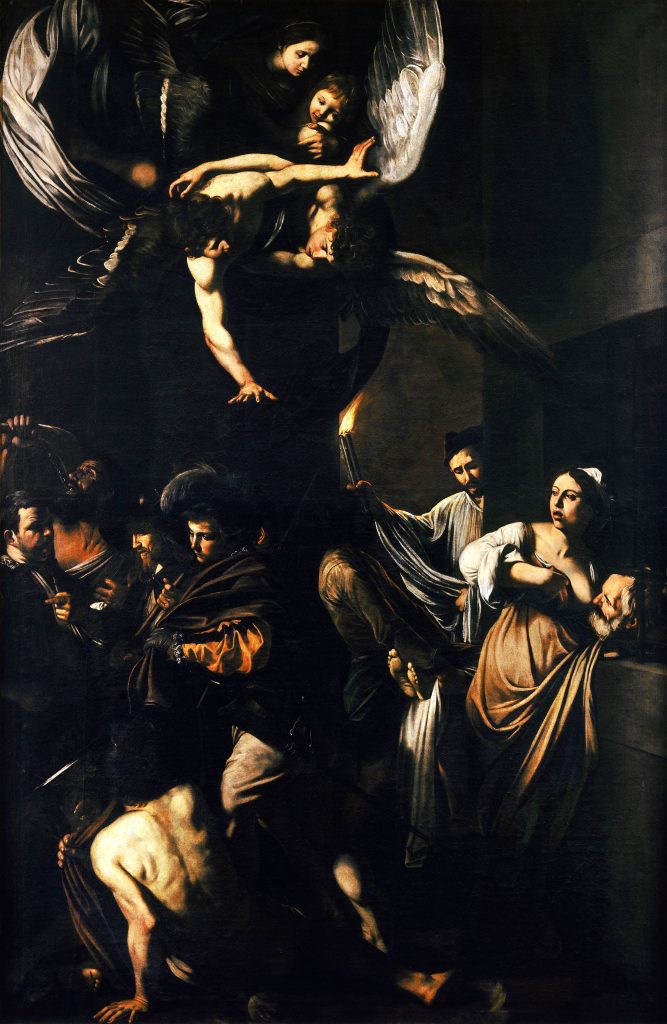
Sette opera di Misericordia, 1607
First there is the portrayal of ordinary people in everyday clothes, a reality of place Doig finds in the scenes of everyday contemporary life as painted by Edward Hopper.
But then there is also a sense of radicality in the realism he captured – a case in point being works like The Seven Acts of Mercy. “It looks as though he’s looked at seven different incidents and then pieced together a picture out of these incidents. So there’s no kind of logic to it in a realist way – it’s not pretending to be a scene that you would actually see. In it two grown-up cherubs seem to be flying sideways… when you twist your head you see they’re obviously having sex. It’s quite an extraordinary piece of painting in its own right within the full painting. I was quite excited and very surprised when I first saw that. It seemed very radical. I remember thinking that he must’ve enjoyed himself when he was making his work.”
Frank Stella – ‘To its enduring credit, Caravaggio’s effort tells us what painting should be’
Frank Stella travelled to Malta in February 1983, where he found fascination in Caravaggio’s representation of the brutal landscape of the Beheading… perceiving a “cinemascopic depth and an ovoid delimitation of space that enables the painting to enhance the theatrical flatness.” His visit woud lead to his Malta series, 12 large three-dimensional collages of bold forms executed between 1983 and 1985.
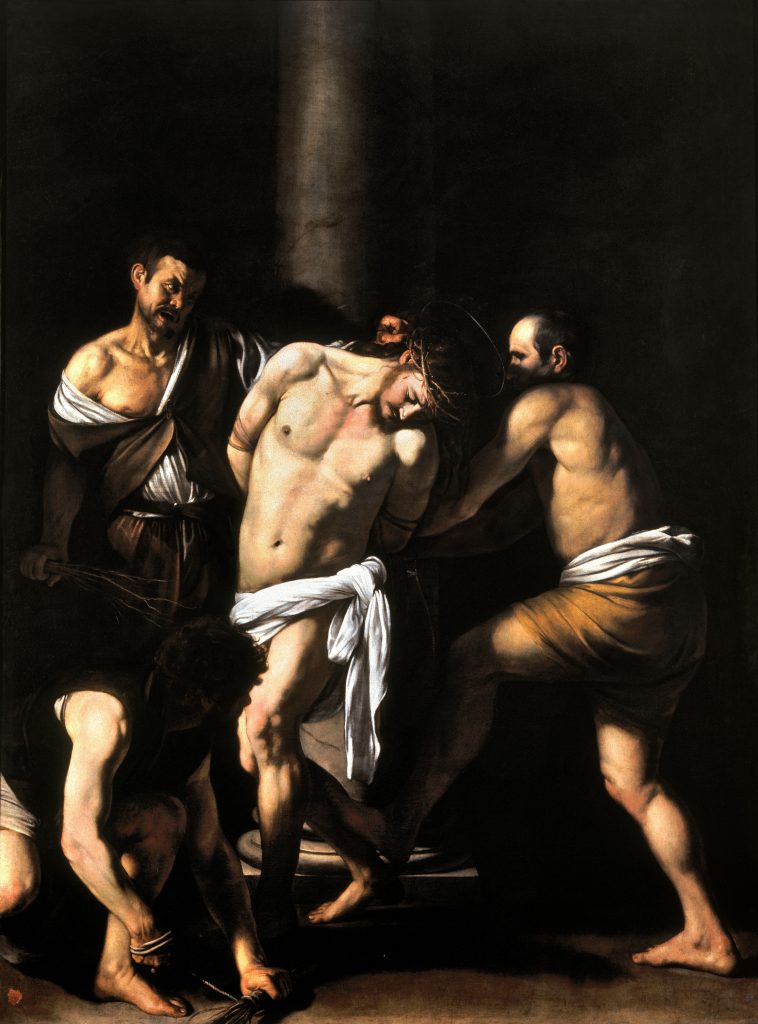
The Flagellation of Christ, 1607
A great champion of Caravaggio’s enduring legacy, his Harvard lectures in 1985 located in Caravaggio those ingredients he felt were also necessary for contemporary abstract art – projective gesture, psychological presence and pictorial import, qualities he saw in the work of “andinsky and Mondrian, and later Pollock, Newman and de Kooning. “To its enduring credit, Caravaggio’s effort tells us what painting should be. The qualities of perfection are always pushed to the front of the picture plane, where we cannot miss them. He communicates the anxiety and urgency inherent in the mechanics of pictorial expression, yet makes these mechanics perform miracles. Dare we ask for more?”
David Hockney: ‘Caravaggio invented Hollywood lighting’
Hockney found in Caravaggio the criticality of lighting subjects, and how this in itself led to deep shadows – these optics intrigued him to scrutinise paintings very carefully.
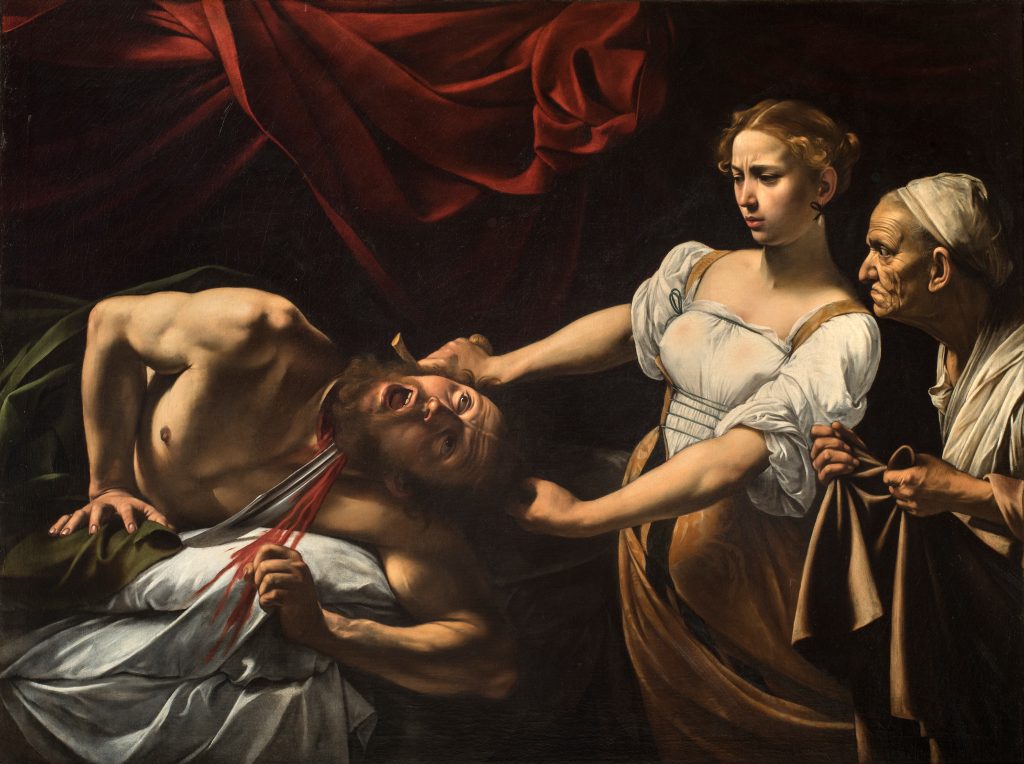
Judith and Holofernes, ca. 1599
In 2016, he told The Guardian: “It is a kind of joke, but I really mean it when I say Caravaggio invented Hollywood lighting. It is an invention, in that he quickly worked out how to light things dramatically. I’ve always used shadows a bit, because that’s what you need below a figure to ground it, but mine are more like Giotto’s than Caravaggio’s. I use shadows that you see in ordinary lighting conditions; you don’t find ones like Caravaggio’s in nature.”
Martin Scorsese – ‘Caravaggio would have been a great film-maker…’
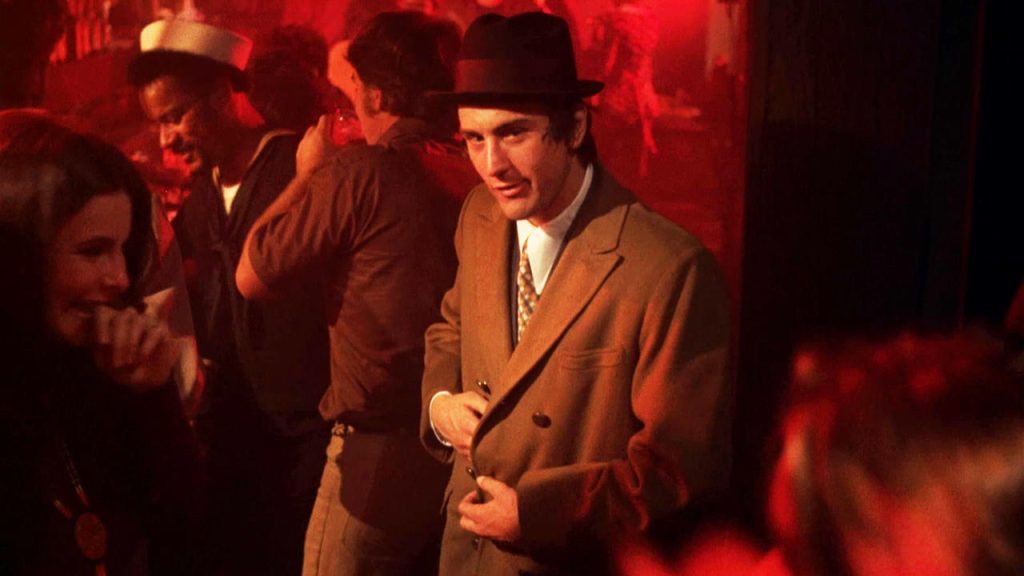
Light and darkness in Caravaggio’s pictures communicated a power to the great film director Martin Scorcese which can be seen in the entirety of the bar sequences in Mean Streets. “He was there in the way I wanted the camera movement, the choice of how to stage a scene. It’s basically people sitting in bars, people at tables, people getting up,” he says in Andrew Graham-Dixon’s Caravaggio: A Life Sacred and Profane.
Robert Deniro starring in Mean Streets, 1973. DIr. Martin Scorcese
Caravaggio’s illumination and the staging of his scenes are akin to those of a modern film director, Scorcese adds: “The Conversion of St Paul… he was choosing a moment that was not the absolute moment of the beginning of the action. You come upon the scene midway and you’re immersed in it… He would have been a great film-maker, there’s no doubt about it. I thought, I can use this too…”
Isaac Julien – Jarman’s queer Caravaggio sheds new light
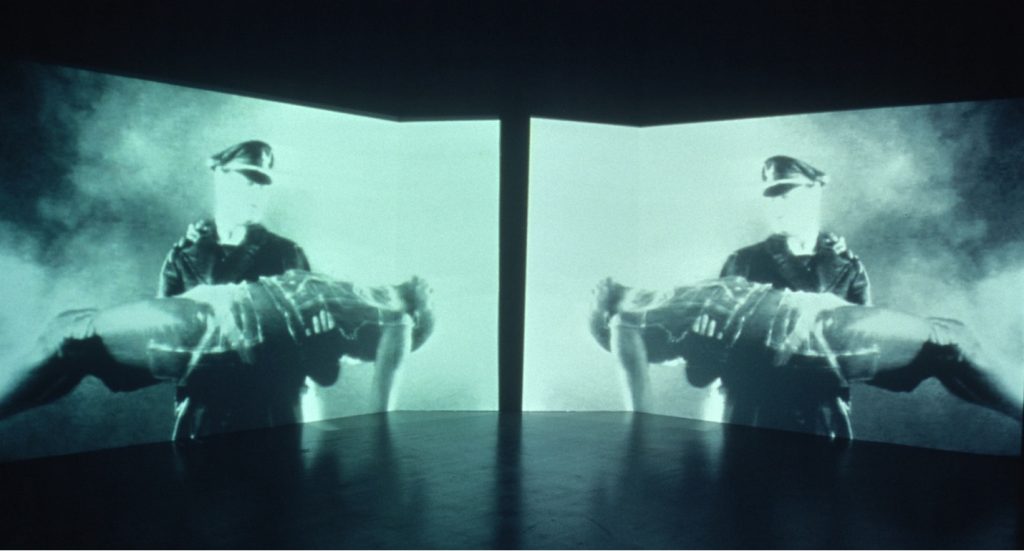
In Rome, Isaac Julien witnessed Caravaggio’s paintings for the first time, discovering how lighting forms the body in his work, a style that has accompanied Julien in the production of his films.
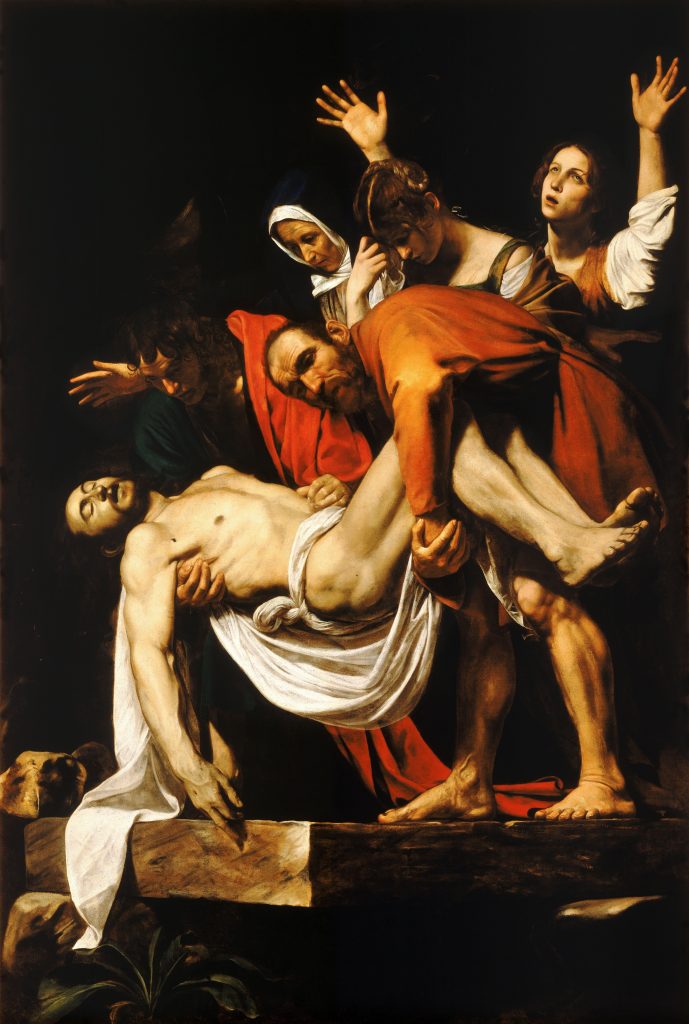
Trussed. Bildmuseet Umeå, 2006. 10’, 16mm film transferred to digital, black & white, soundThe Entombment of Christ, c.1602-3
Trussed (2006), a 10’, 16mm film in black and white, includes a ‘pietà’ scene – the compassionate succour of a moribund person – which he also credits, as with other works like True North (2004) in part to an influence of historic painting, as he says in this podcast by The Art Newspaper.
Mentored by Derek Jarman, Julien’s visual language was inspired by Jarman’s Caravaggio “I’m very interested in the tableaux vivants: you recognise a scene from a Caravaggio painting and it comes alive as a moving image. Music, costume, decor, performances and the style of editing all form this amazing portrait of Caravaggio which is unusual and quite modern.”
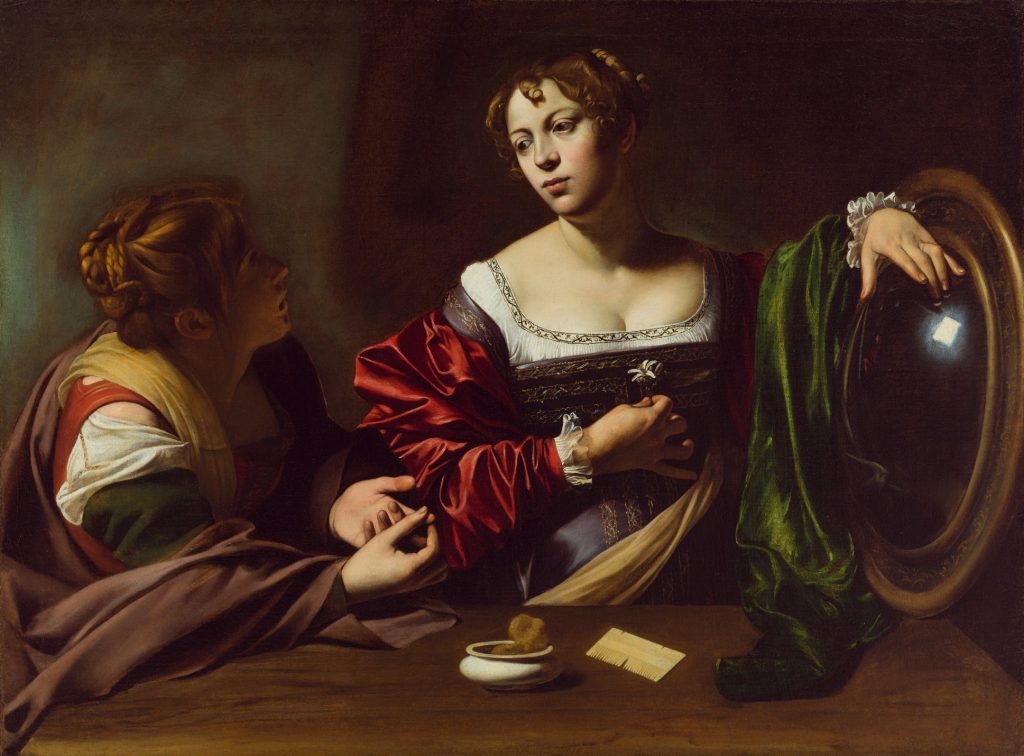
Nan Goldin – ‘Caravaggio knew all the people that he painted’
“Caravaggio also knew all the people that he painted. They were his lovers or hustlers. Pasolini used boys from the street that he loved that he desired. Fassbinder only used people he knew. Cassavetes used the same people over and over, so I am not the first one to do that, but I think that people have forgotten how radical my work was in the 1980s, when I started, because nobody was doing work like that. Now, so many people have done work like that like Wolfgang Tillmans, Juergen Teller, Corinne Day… Now people think I am just one of many who’ve done that. They do not understand that The Ballad of Sexual Dependency was so radical when it came out.”