When the Malta International Contemporary Art Space announced its exhibition programme ahead of its October 2024 opening, a solo project by Californian artist Reggie Burrows Hodges was listed as an important fixture in the museum’s ambitious first two years. What nobody could have anticipated then – not even MICAS’s own team – was quite how far the collaboration would travel.
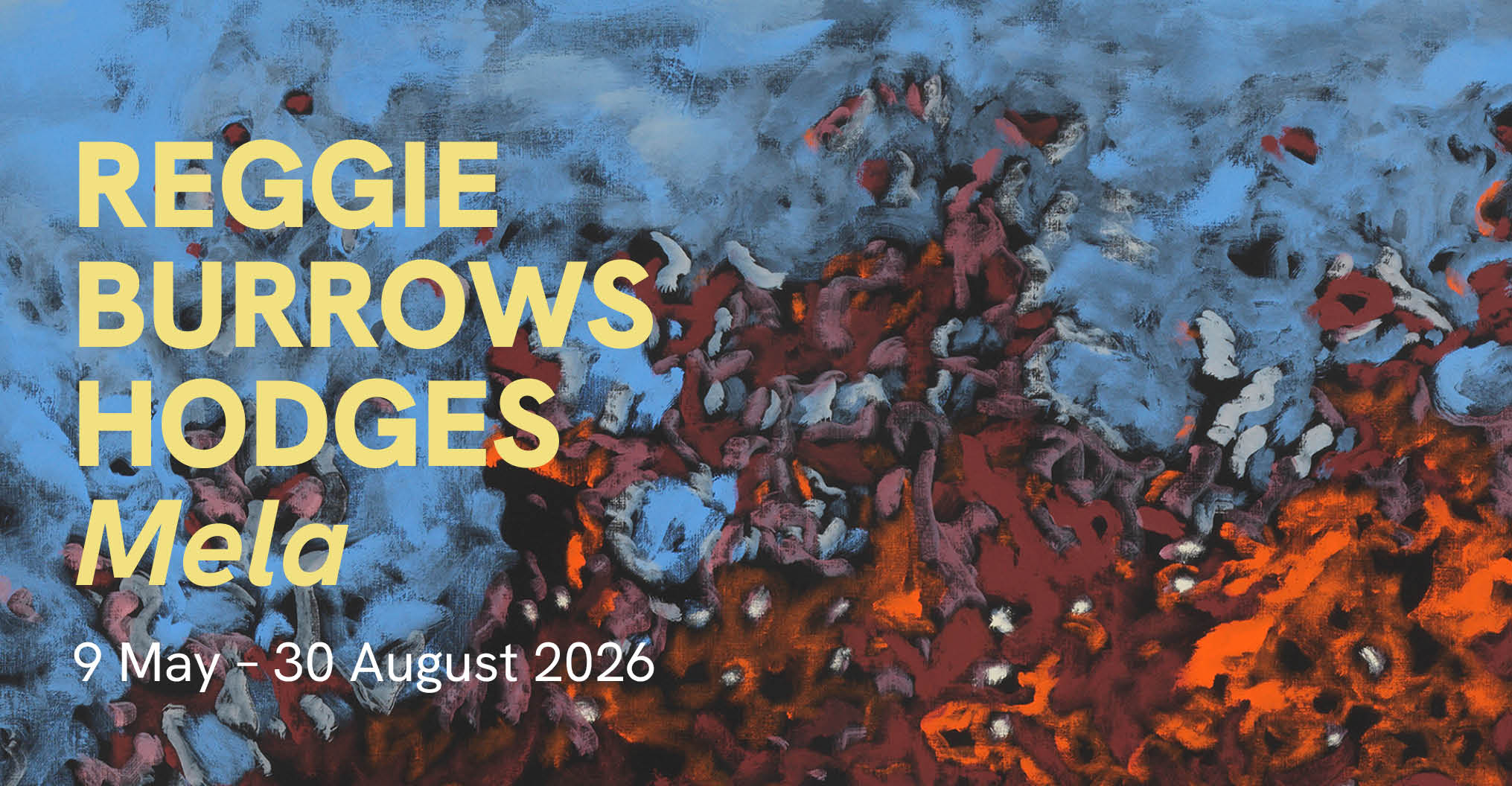
Reggie Burrows Hodges: Mela, which opened formally on 9 May and runs until 30 August, is the most ambitious body of work of the artist’s career: 30 paintings produced specifically for this exhibition, including the largest canvases he has ever made, spread across the entire gallery floors and walls of MICAS. For an artist born in Compton in 1965 and now recognised as one of the most compelling figurative painters working in America today, it also marks his first-ever solo exhibition in Europe.
The scale of the centrepiece alone announces the ambition of the project. Mamajamma, more than 4.5 metres tall and over 8 metres wide, dominates the historic walls of the museum. It is a colossal response to Caravaggio’s Beheading of St John the Baptist, housed at St John’s Co-Cathedral – a painting that Hodges encountered within the first few days of arriving in Malta, and one that proved decisive.
As MICAS Artistic Director and curator of the exhibition, Edith Devaney noted in her opening speech, Hodges’s deep engagement with high contrast of light and dark makes the Caravaggio connection immediately legible: his work is also, in its way, a homage to the master of Baroque and to the way light can be rendered.
“The story of how the exhibition came to exist is itself one of institutional trust and personal commitment. When Hodges agreed to work with MICAS, the museum was still under construction. He had not yet seen the finished galleries. Like several other artists who committed to the early programme, his participation required, a considerable leap of faith,” Devaney says.
And the museum remains profoundly grateful for it. It was Waqas Wajahat, chair of MICAS’s International Committee, who first introduced Hodges to the institution.
Hodges made his first visit to Malta in 2024, when he decided to relocate his studio to the islands with the intention of producing an entirely new body of work. Over the course of more than a year, he did exactly that.
The result is an exhibition organised around several distinct series, each examining Maltese life and contemporary society with what Devaney described as “profound honesty and without judgement.”
Hodges’s long-running Labor series – which explores and celebrates the activity of productive work, often by those who benefit least from it – acquires a Maltese perspective here. “His signature figures, formed out of negative space and shadow, are rendered deeply connected to the situations in which they appear: figures exercising along the shoreline, women of privilege at leisure, migrants labouring on development projects. Each is handled with empathy, and composed with remarkable beauty,” Devaney says.
That beauty is not incidental. It is structural. “The application of pigment, the sensitivity of palette, the fearless scale – these qualities envelop the viewer both visually and emotionally.”
And in the Barrel Vaults, a companion sound installation extends the immersive logic further: a soundtrack recorded across several of Malta’s prehistoric sites coalesces with the persistent presence of the surrounding sea.
The exhibition’s title is drawn from the Maltese discourse marker “mela” – a word that, as Hodges observed, often precedes the expression of a thought. It was a characteristic observation from an artist whose entire project in Malta has been one of attentive listening. His subjects include the rugged coastline and the Mediterranean that encircles it, the built environment and the forms of labour that sustain it, and the force of community running through all of it.
For Devaney, who served as curator of the exhibition and maintained a sustained dialogue with Hodges throughout its development – “to encourage, collaborate, and witness the many stages of the work’s evolution” – the outcome exceeds what she could have imagined when the project began. The work is, she said, “deeply imbued with his experience and discovery of Malta – its history, culture, landscape, and people. It was created for this national museum, and therefore, in many ways, for all of us.”
Hodges himself has spoken of the responsibility he felt. “I understood clearly,” he said, “that there was a responsibility to really put my back into this and offer the best I have.” The result, he describes simply, is “a poem to Malta”.
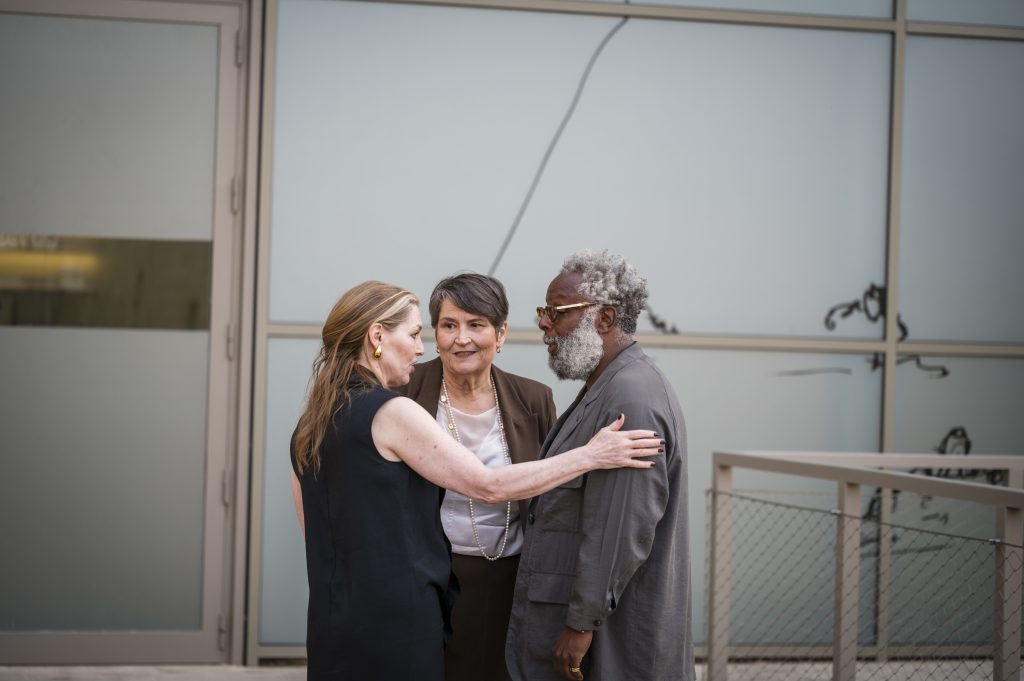
Devaney closed her speech to guests at the opening of Reggie Burrows Hodges: Mela on 8 May with a single word of Maltese. “Prosit, Reggie,” she said. “We congratulate you and thank you deeply for what you have given us – for what you have given Malta. An exhibition made here, about here, and one which, in terms of its achievement, is nothing short of astonishing.”