Milton Avery was a quintessential American original whose work has nonetheless gained steady international recognition since his death in 1965. This recognition owes much to the independent spirit that painters worldwide have identified in his distinctive compositional structures and chromatic language. Avery’s independence, however, was hard won. One of his closest friends and protégés, Adolph Gottlieb, observed that for his own generation of artists, the freedom to develop a new and vital painterly idiom was inseparable from what he perceived as America’s general indifference to the cultural relevance of the artist. Writing in the 1947 issue of Tiger’s Eye, Gottlieb noted: “The dismal aspect of our separation from a social role is that we are not being used by our society … If we had a social role, we would be subservient to the society. The very fact that we are not being used and are isolated … is what gives us our freedom.”
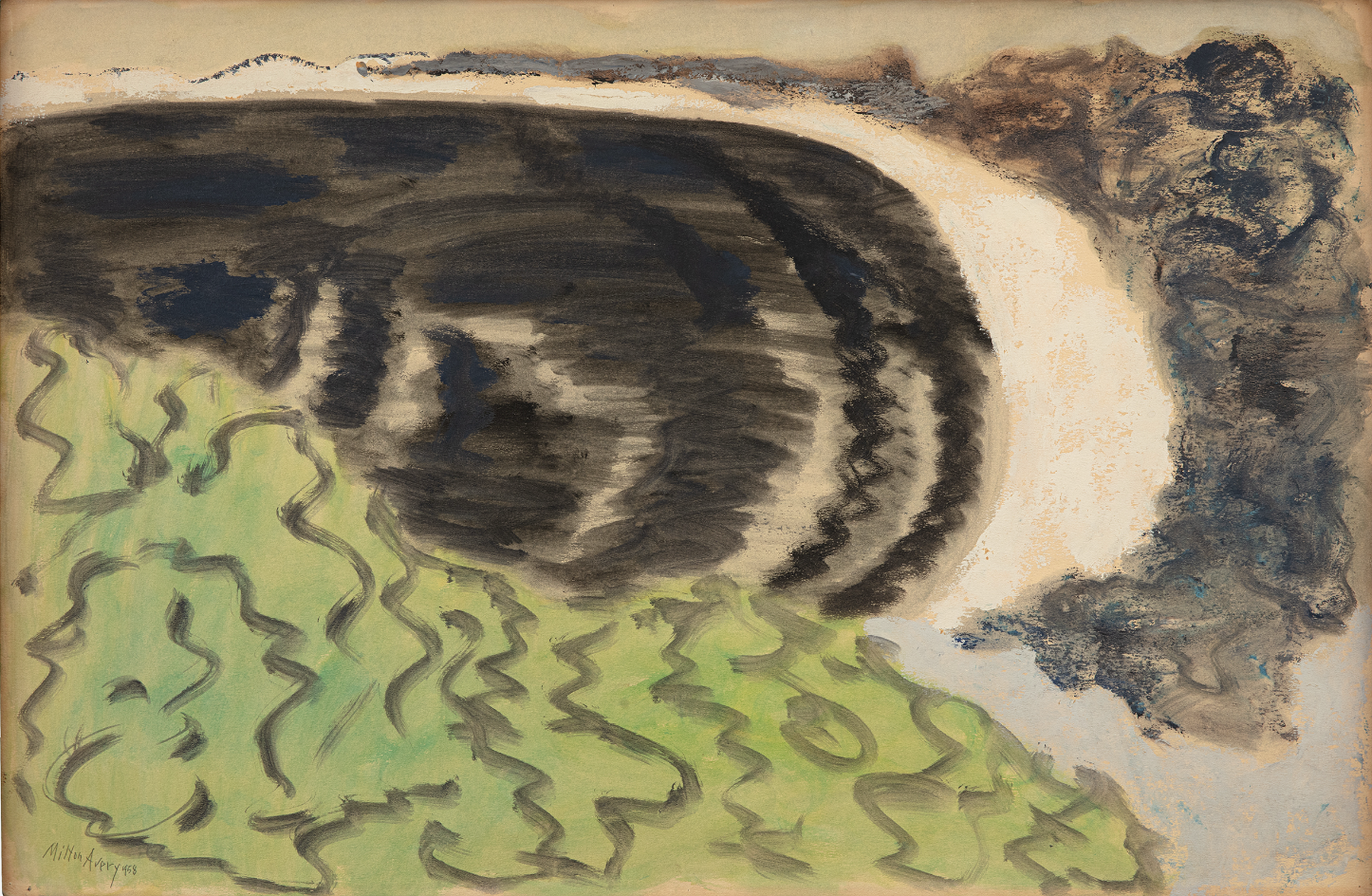
Avery worked for years in relative obscurity early in his career, and perhaps with his own suspension of disbelief in societal approbation; yet, he ultimately forged a style so original that it came to assert its own self-evident truth. His earliest contacts with American pastoral painters such as John Henry Twachtman and Ernest Lawson helped him to identify a very deft and gentle kind of paint handling that would stay with him through his increasingly sophisticated assimilation of modernist tropes of composition and form. This finely tuned exhibition brings together exemplary works from Avery’s figural and landscape themes, while also presenting a perceptive grouping of international contemporary artists for whom Avery has proven an essential painterly forebear.